

Keynotes
Maurizio Magarini received his M.Sc. and Ph.D. degrees in Electronic Engineering from Politecnico di Milano, Italy, in 1994 and 1999, respectively. He joined the same university as a Research Associate in 1999, later serving as an Assistant Professor until 2018 and as an Associate Professor since then. His research focuses on communication and information theory applied to wireless, optical, quantum, and molecular systems. His recent work covers semantic communications, smart radio environments, vehicular networks, the design of 5G/6G waveforms, UAVs, high-altitude platforms, wireless sensor body area networks, and the Internet of Bio-Nanothings (IoBNT). He has published around 280 peer-reviewed papers, holds three international patents, and has received nine best paper awards. He is an Associate Editor for IEEE Transactions on Wireless Communications, IEEE Transactions on Molecular, Biological, and Multi-Scale Communications, and IET Electronics Letters, and an Area Editor for Nano Communication Networks. He co-chaired ACM Nanocom 2024 and EAI BodyNet 2023, and served as Vice General Chair of ACM Nanocom 2021. He has been involved in several international and national research projects and contracts as a PI, co-PI, and participant researcher.

Maurizio Magarini
Associate Professor, Politecnico di Milano
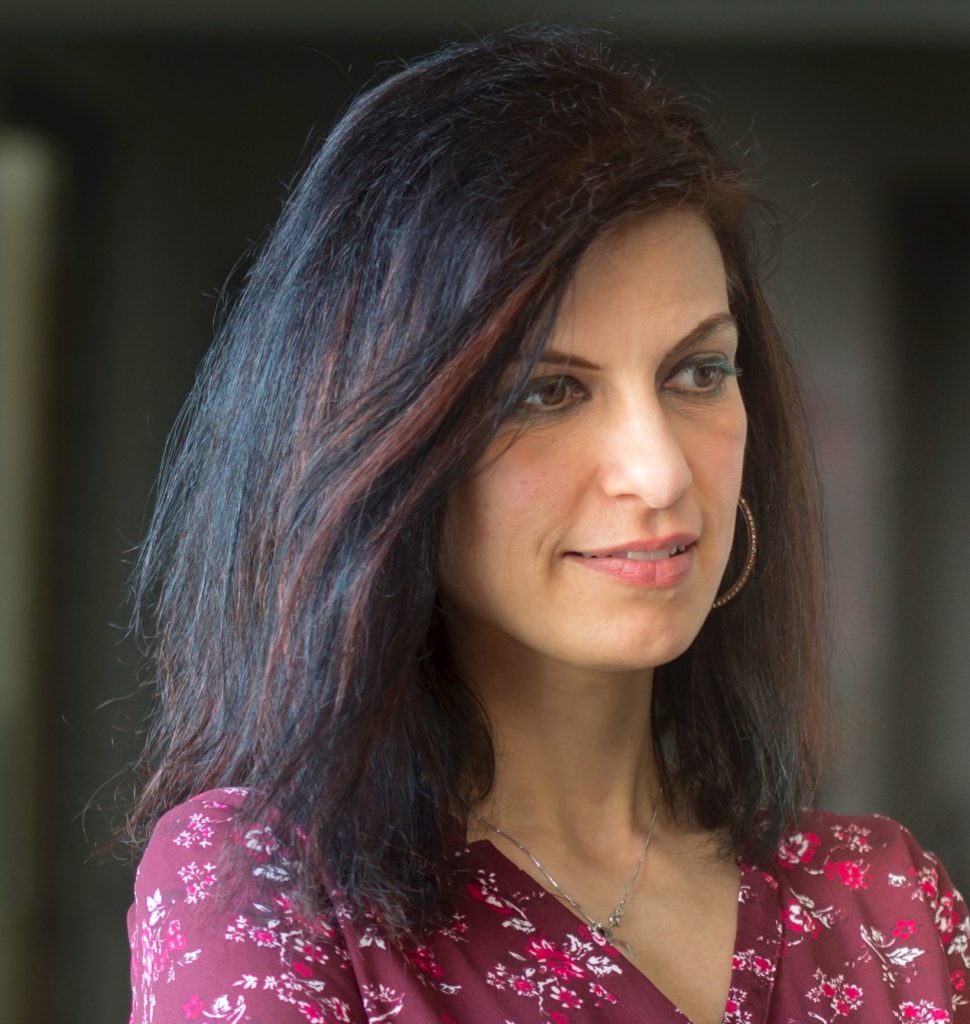
Valeria Loscri
Research Director at Inria Lille (France)
Valeria Loscri (M’03, SM’17) (http://researchers.lille.inria.fr/~loscri/home.html) is research director at Inria Lille (France). She joined Inria since Oct. 2013. From Dec. 2006 to Sept. 2013, she was Research Fellow in the TITAN Lab of the University of Calabria, Italy. She received her MSc and PhD degrees in Computer Science in 2003 and 2007, respectively, from the University of Calabria and her HDR (Habilitation à diriger des recherches) in 2018 from Université de Lille (France). Her research interests focus on emerging technologies for new communication paradigms such as Visible Light Communication (VLC), mmWave, cyber security in wireless networks and cooperation and coexistence of wireless heterogeneous devices. She is involved in the activity of several European Projects (Horizon Europe MLSysOps, H2020 CyberSANE, FP7 EU project VITAL, etc.) and Nationa Projects such as the project ASTRID DEPOSIA, ANR NEMIoT.
She is in the editorial board of IEEE COMST IEEE Transactions on Information Forensics and Security (TIFS), Elsevier ComNet, ComCom. She is serving as TPC members in several primary international conferences, such as IEEE ESORICS, IEEE CNS, IEEE INFOCOM, IEEE PerCom.
She coordinated the research activities of several PhD students and postdoc. In 2021 she has been mominated Women Stars in Computer Networking and Communications by the IEEE Communication Society. She has been shortlisted as Cyber Researcher by European Women Cyber Day – ECWD in 2024. She is Action Chair and Scientific Holder of BEiNG-WISE COST Action (https://beingwise.eu/) (since 2023). She has been European Partnership Scientific Delegate for Inria Lille since (Oct. 2016 – Sept. 2019). She has been appointed as member of the Technological Transfer Committee at Inria Lille (Oct. 2016 – Spet. 2018).
She was appointed as Evaluator Expert for Horizon European Projects, JU-SNS and JU-KDT (2023).
In 2024 she has been appointed as chair of the expert panel for fundamental research W&T5 Computer Science & Information Technology FWO. She has been Scientific International Delegate for Inria Lille (2019 – 2025).
Since October 2025 she is Deputy Scientific Director at Inria.
Giancarlo Fortino
Full Professor of Computer Engineering at the Dept of Informatics, Modeling, Electronics, and Systems of the University of Calabria (Unical), Italy
Giancarlo Fortino (IEEE Fellow 2022) is Full Professor of Computer Engineering at the Dept of Informatics, Modeling, Electronics, and Systems of the University of Calabria (Unical), Italy. He received a PhD in Computer Engineering from Unical in 2000. He is also distinguished professor at Wuhan University of Technology (China), high-end expert at Huazhong University of Science and Technology (China), senior research fellow at the Italian ICAR-CNR Institute, CAS PIFI Group international fellow at SIAT (Shenzhen), and Distinguished Lecturer for IEEE Sensors Council, SMC society, and IoT TC. He was also visiting researcher at ICSI, Berkeley (USA), in 1997 and 1999 and visiting professor at Queensland University of technology in
2009. At Unical, he the chair of the PhD School in ICT, the director of the SPEME lab and of the Radiomics lab, and the director of the Postgraduate Master course in AI-driven Radiomics, and as well as co-chair of Joint labs on IoT technologies established between Unical and the WUT, SMU and HZAU Chinese universities, and the AI-driven Robotics Lab funded with the J.C. Bose University of Science and Technology, YMCA. Fortino is also the scientific responsible of the Digital Health group of the Italian CINI National Laboratory at Unical. He is Highly Cited Researcher 2020-2025 in Computer Science by Clarivate (the only Italian professor
ranked). He had 25+ highly cited papers in WoS, and h-index=90 with 35000+ citations in Google Scholar. His research interests include wearable computing systems, e-Health, Internet of Things, and agent-based computing. He is
author of 800+ papers in int’l journals, conferences and books. He is (founding) series editor of IEEE Press Book Series on Human-Machine Systems and EiC of Springer Internet of Things series and AE of premier int'l journals such
as IEEE TASE (senior editor), IEEE TAFFC-CS, IEEE THMS, IEEE T-AI, IEEE SJ, IEEE JBHI (section editor), IEEE OJEMB, IEEE OJCS, Information Fusion, etc. He chaired many int’l workshops and conferences (130+), was involved in a huge number of int’l conferences/workshops (800+) as IPC member, is/was guest-editor of many special issues (80+). He is cofounder and CEO of SenSysCal S.r.l., a Unical spinoff focused on innovative IoT systems, and recently cofounder and vice-CEO of the spin-off Bigtech S.r.l, focused on big data, AI and IoT technologies. Fortino is the Vice President of Cybernetics (term 2026-2027) of the IEEE SMCS, member of the IEEE SMCS ExCom, and former chair of the IEEE SMCS Italian Chapter.
